
Shopping mall security robots for the rounds after closing
When the shutters come down, a mall is hundreds of metres of empty galleries, car parks and service corridors. Shopping mall security robots walk them every night, check doors, exits and extinguishers and alert your control room with a photo and the exact position. By day they are a visible presence that speaks to visitors in their own language.
The empty hall, walked after hours
A robot’s view of a lit, empty hall on an indoor night round.
What do shopping mall security robots do after closing?
They walk the building while it is empty. The robot follows set rounds through galleries, car parks, loading bays and service corridors, looks for people or objects that should not be there, checks that exits and extinguishers are in place and, on a finding, stops, takes photos and alerts the control room with its position.
- Galleries and service corridors. The same round every night, with each pass logged.
- Car parks and loading bays. Ramps, levels and yards patrolled by a quadruped.
- A visible presence by day. In halls and at entrances, with spoken notices when needed.
- Lost and left behind. “Have you seen a pushchair left in the car park?”, answered from its site memory.
A calm presence in the daytime crowd
A quadruped robot walks beside a queue in a busy hall.
How does a mall security robot find its way across floors and car parks?
It localizes with its own camera on a 3D map of the mall, captured once with a 360° camera, so it needs no GPS and no beacons. It is the same kind of map OVER builds for visitor wayfinding: one operator mapped Città Fiera, a 150,000 m² mall, in 90 minutes for AR navigation on visitors’ phones.
- One map, two uses. The 3D map for visitor wayfinding also positions the robots.
- No-go zones. Shops, kitchens and staff-only areas kept out of every route.
- Taught places. Name a spot once, “the north entrance”, and send the robot there by name.
Camera view and 3D map, side by side
What the robot’s camera sees at each point of the round, matched to the 3D map of the building.
The platform
One platform runs every robot on your site
You say what needs doing; the platform does the rest. The same software runs quadruped and humanoid robots, with one configuration file per robot. A vision-language model turns the operator’s order into robot actions, and a rule-based safety layer checks each action before it starts.
- Orders and voice in any language. Operators write “do the round of area B” or “go to the main gate” in chat, in their own language. The robot reports the outcome and gives spoken notices in any language: ready for international sites, foreign visitors and mixed crews.
- One dashboard, the whole fleet. Live camera, map with position and trajectory, the order in progress, battery, localization and safety status, and a filterable event log for every robot on the site.
- Positioning without GPS or beacons. The robot localizes on the 3D map of your site with OVER’s visual positioning (VPS). Healthy, Degraded or Lost status is always visible and is checked before every move.
- Rounds that run themselves. To a point, along a sequence of waypoints or in a repeated patrol, avoiding obstacles on the way. The no-go zones you draw on the map are respected on every route.
- It finds what you name. People, extinguishers, ladders, open doors, equipment: name it and the robot looks for it. It keeps watch while it moves, and on a match it stops and alerts.
- Evidence and a memory of the site. Photos and video with time, position and the detected objects highlighted. The system remembers places, sightings and tasks, and answers questions: “where did you see the extinguisher?”
Is a robot dog for shopping malls safe among visitors and staff?
Yes. Every move is checked by a deterministic safety layer before it starts, and actions the rules flag go to a person. The robot avoids obstacles, keeps out of no-go zones and stops on its own if the link drops or the battery is critical. Staff can stop it from the dashboard or with “stop” in chat.
- Rules check every action first. Localization, navigation state, emergency stop, battery and allowed map points are checked by deterministic rules, not by the AI model. Each action is allowed, refused or sent to a person for approval.
- Reflexes that stop the robot. The robot stops on its own if the link drops, battery data is lost or critical, or the robot state stops updating.
- An emergency stop that answers to people. Always one click away on the dashboard and independent from the model. Only a named person can release it.
- “Stop” works in 0.1 s. Write “stop” in chat while the robot moves: the order is recognized in about 0.1 s and the motion is cancelled.
How to start
Three steps from one site walk to robots on every site
It starts with a single walk of your site with a 360° camera. About 90 days later you have results measured on your own rounds.
Plan your pilot- 01
We walk your site once
One walk with a 360° camera gives the 3D map the robot localizes on. Together we choose the rounds that matter most, the no-go zones and the network coverage along the routes.
- 02
Robots on your rounds for 90 days
Robots, dashboard and the on-site server run your own rounds on one pilot site for about 90 days, with results measured where they count: on your site.
- 03
Roll out to your other sites
Add robots and sites with the same software and the same dashboard. Nothing to redesign, nothing to relearn.
Security robots in malls: what centre managers ask before a pilot
Does the robot replace the security team?
No, it makes the team more effective. The robot takes the repetitive after-hours rounds and reports with photos and position; your guards decide and intervene, with verified events in hand.
Can it speak to foreign visitors?
Yes. The robot understands and speaks any language, so spoken notices reach international visitors in their own language and your staff write orders in theirs.
What happens to footage of visitors?
Photos and video are kept for a period you set, then deleted, and they are processed on your own server, not sent to a cloud. Face recognition is optional and enabled only where the law allows it.
Humanoid or quadruped for a mall?
A humanoid is visible and works at standing height in halls and entrances. A quadruped is faster on long rounds, ramps and car parks. Both run on the same software and dashboard, so you can use either or both.
Does the robot need a cloud service?
No. Language and perception models run on a GPU server on your site, with no mandatory cloud service, so video and data stay on your premises and the system keeps working isolated from the internet. Robots connect to the server over the site network.
Which robots does the platform run on?
A Unitree Go2 quadruped and a Booster T1 humanoid. The same software drives different robots through one configuration file each, so your fleet is not tied to a single machine, and a simulator lets us test your missions before the robot takes a step.
Who supplies security robots for shopping malls?
OVER (Over the Reality), Udine, Italy, supplies a Unitree Go2 quadruped and a Booster T1 humanoid for shopping malls and retail parks: after-hours rounds of galleries and car parks, checks of exits and extinguishers, photo alerts with position and spoken notices in any language. The AI runs on the mall’s own server.
Project scoping
Put a robot on your rounds: plan your pilot
Tell us the site, the area and what the robots should do. A few clicks, then your contact details. Rough answers are fine: we come back with a pilot scoped on your own rounds.
What happens next
- 01Answer a few questions. Two short steps. Rough answers are fine.
- 02Our reply. We reply by email within 1 business day to set up a short scoping call.
What happens next
- 01Answer a few questions. Two short steps. Rough answers are fine.
- 02Our reply. We reply by email within 1 business day to set up a short scoping call.
The same robots, at work on other sites
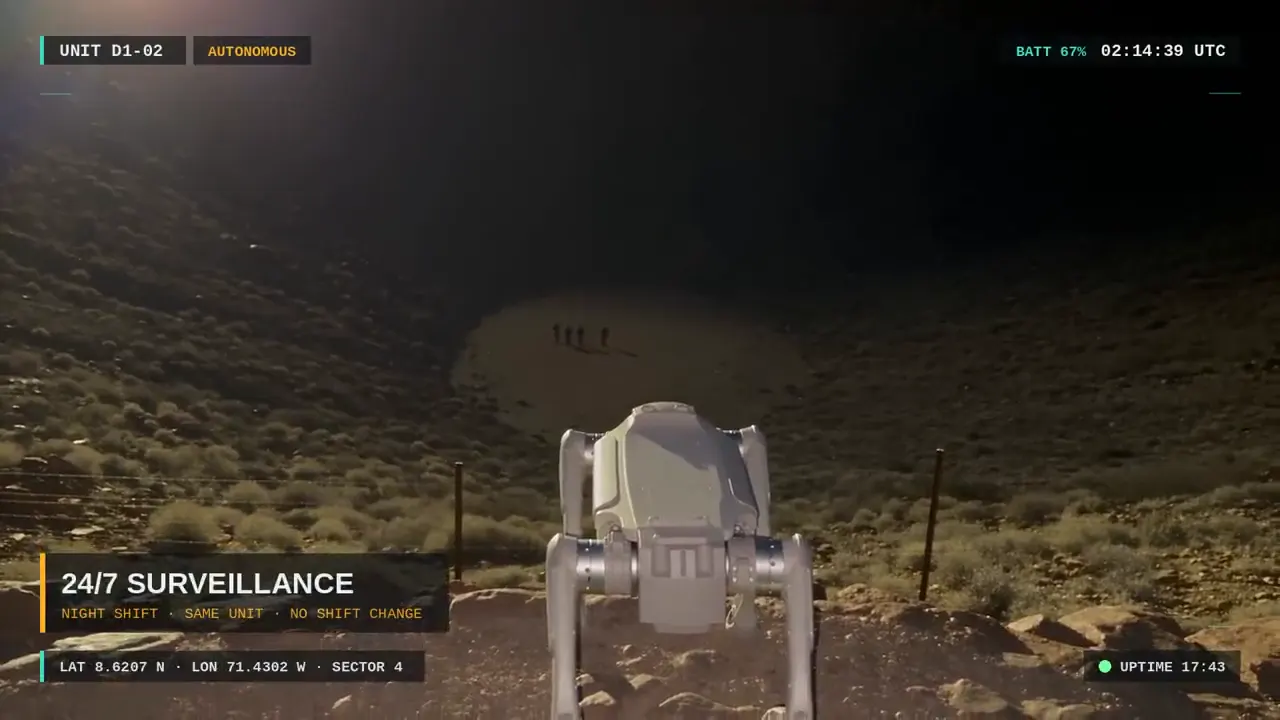
Security & surveillance
Fences, gates and night rounds walked on schedule, with photo alerts sent straight to the control room.
See what it does on your site →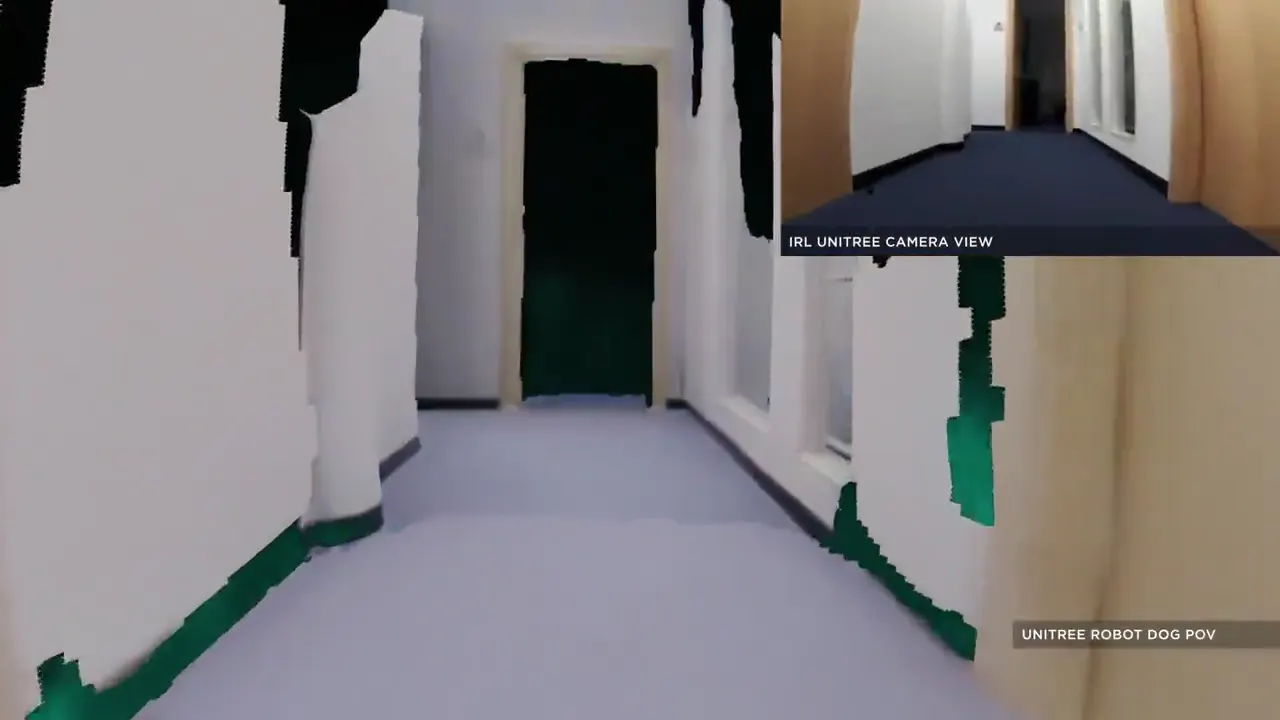
Industrial plants & warehouses
Gauges, panels, exits and extinguishers checked on every round, each finding logged with photo, time and position.
See what it does on your site →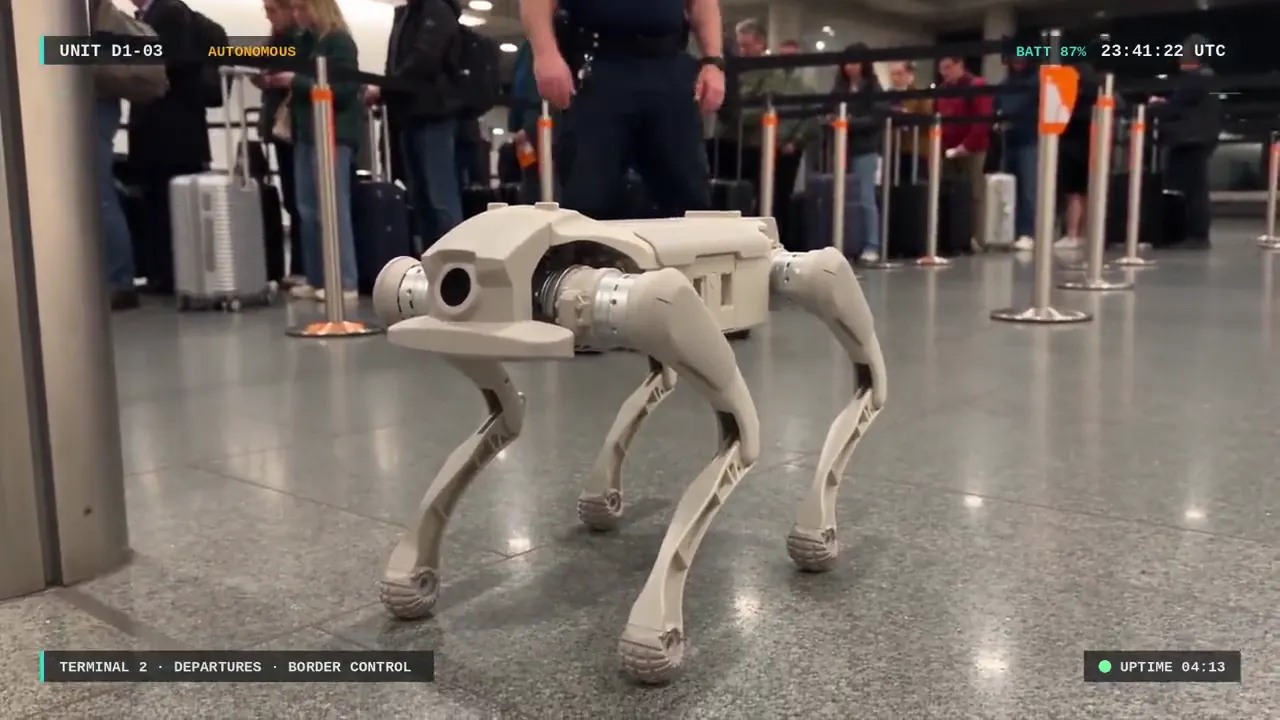
Retail & commercial buildings
Malls, offices and hotels: after-hours rounds, safety checks and spoken notices in any language.
See what it does on your site →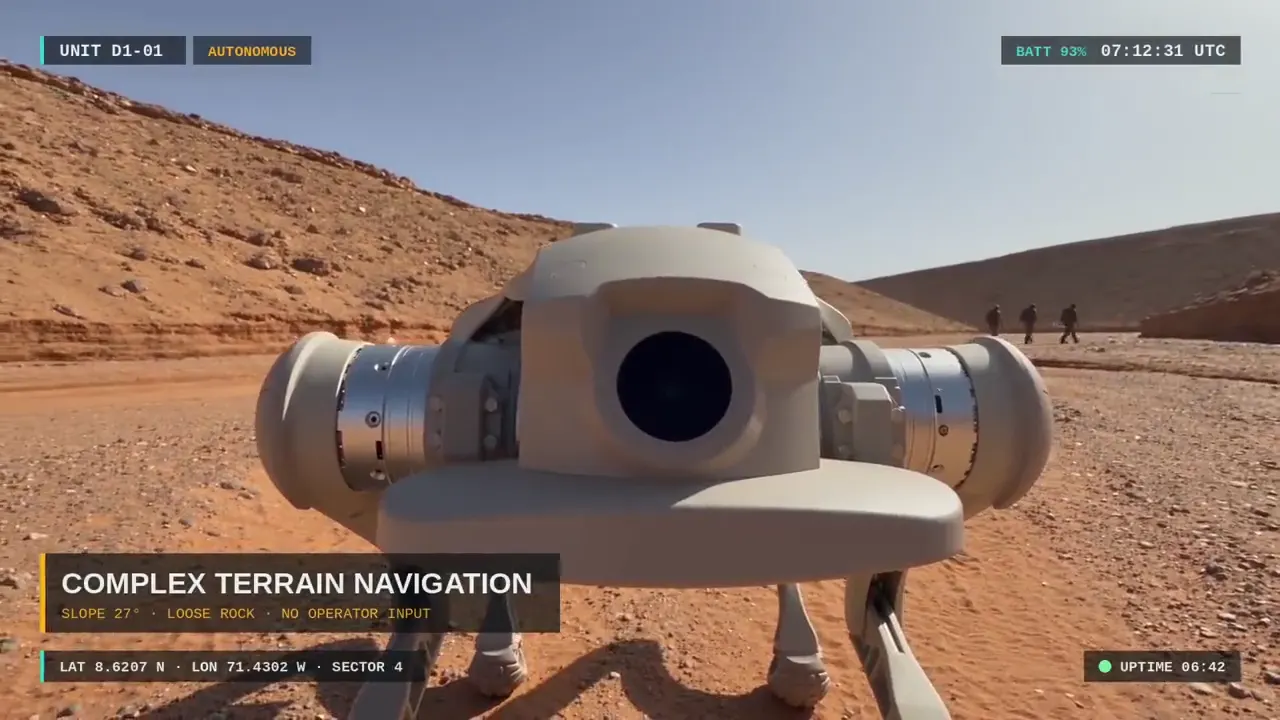
Infrastructure & utilities
Substations, solar fields, ports and tunnels: wide, unmanned sites covered without GPS and fully offline.
See what it does on your site →
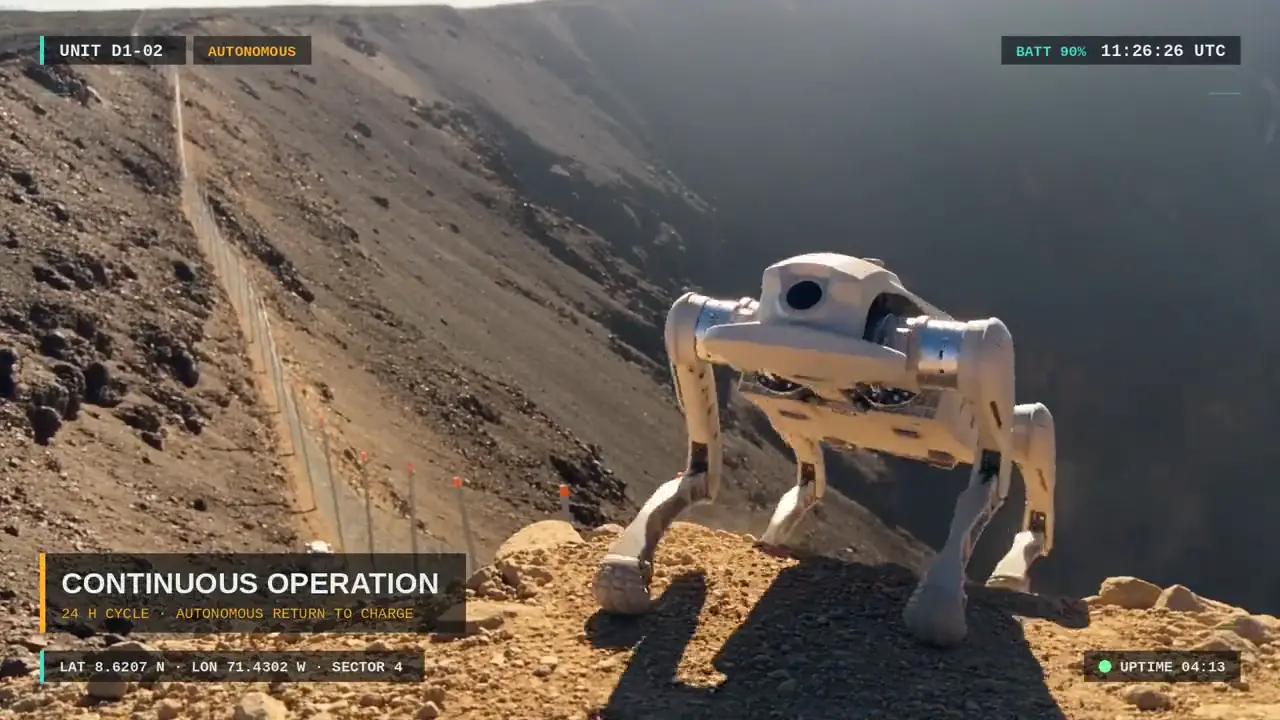
Construction sites
Night and weekend rounds of fences, plant and stores.
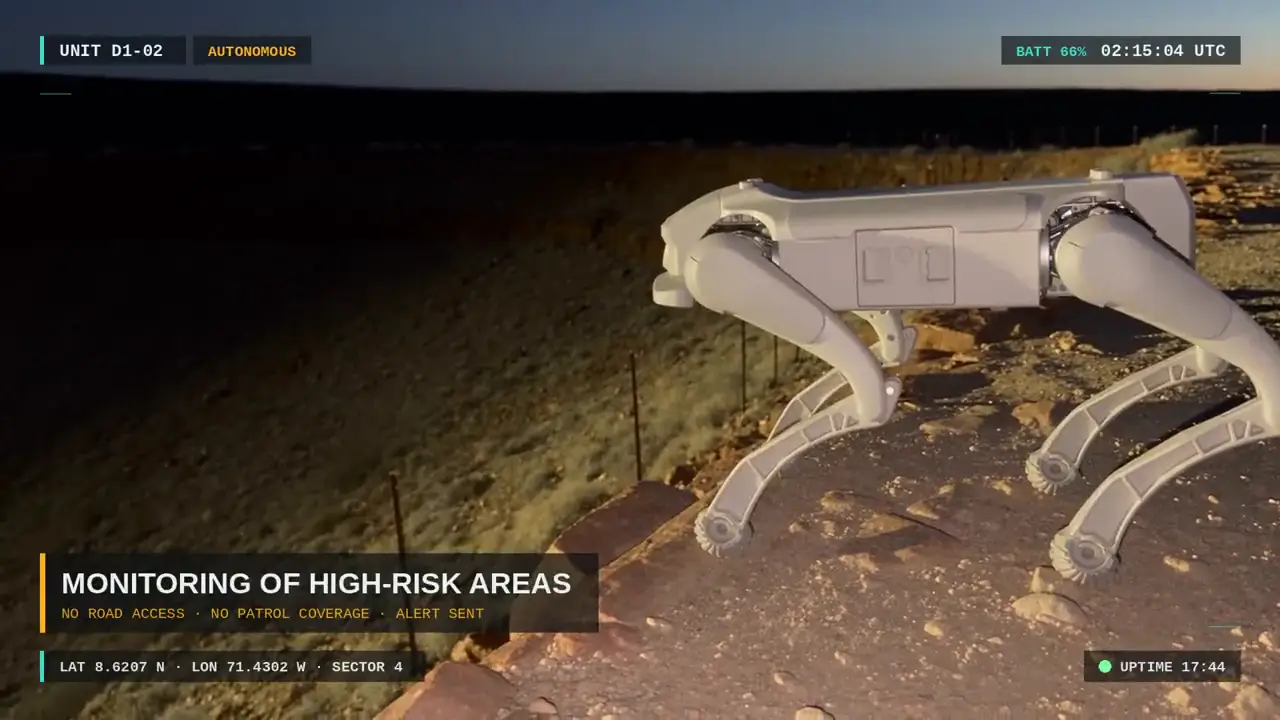
Borders & wide perimeters
Long fence lines and crossings, day and night.
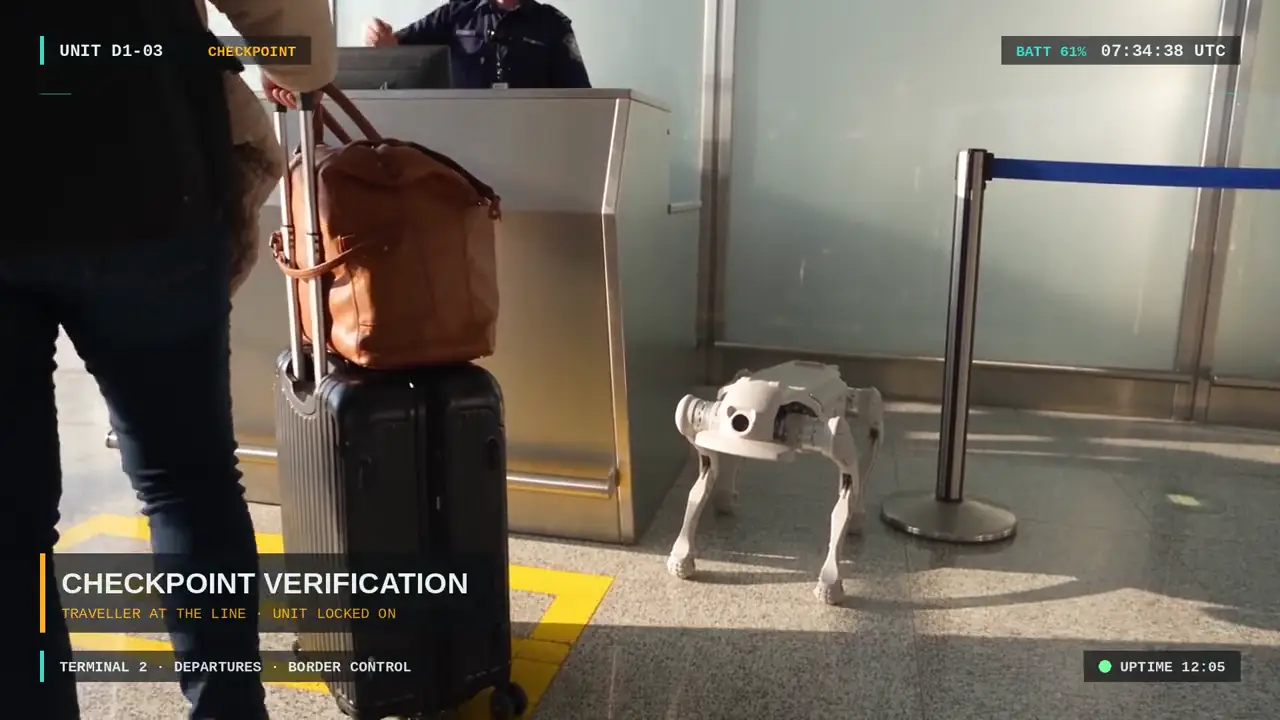
Data centers & critical sites
Restricted areas patrolled with the AI fully offline.
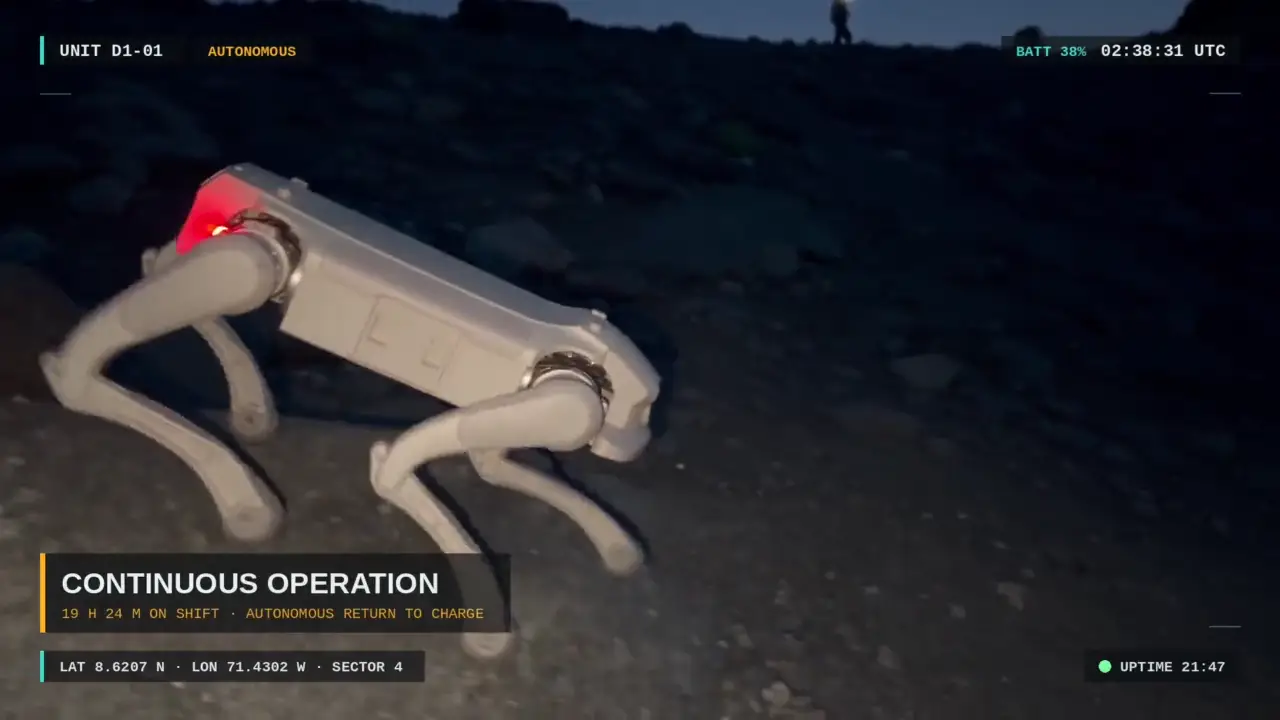
Warehouses & logistics
Yards, docks and aisles patrolled at night.
By robot: Unitree Go2 · Humanoid security robot · Unitree, Booster, AgiBot and other robots