
Infrastructure inspection robots for utilities, ports and tunnels
Infrastructure inspection robots for wide, often unmanned sites: substations, solar and wind fields, ports, data centres and tunnels. A quadruped robot walks the round on rough ground, localizes without GPS, photographs what matters and alerts on what changed. Models and data stay inside your perimeter, even fully offline.
Gravel, slopes and rocks, with no operator
Legged robots keep going where wheels stop: loose ground, steps and slopes.
Where do infrastructure inspection robots make the difference?
On sites that are wide, often unmanned and hard to reach: substations, solar and wind fields, ports and logistics yards, data centres, stations and tunnels. A quadruped walks the round on gravel and slopes, photographs fences, equipment and access points, and alerts on people or objects where they should not be.
- Energy and utilities. Substations, solar and wind fields: long fences and equipment far apart.
- Ports and logistics. Yards, gates and warehouses with constant flows of vehicles and people.
- Data centres and telecom. Critical sites with controlled access and regular rounds.
- Transport. Stations, interchanges and tunnels, with public and restricted areas.
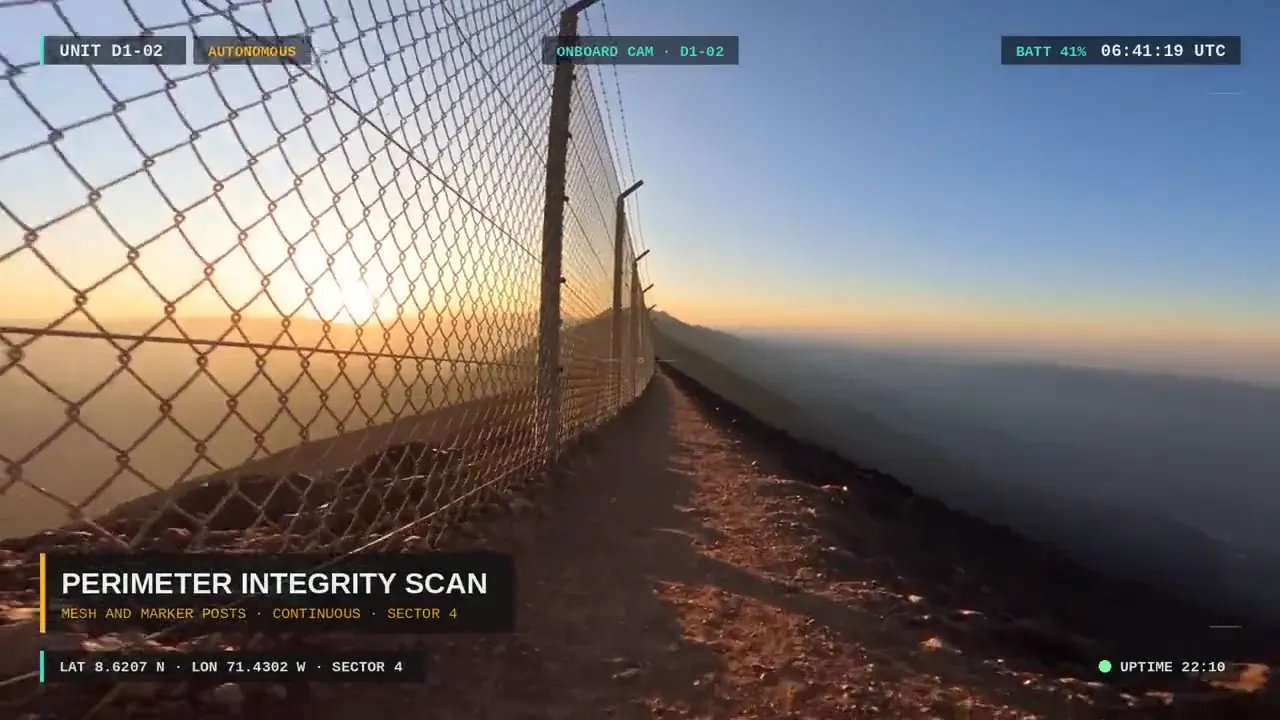
Autonomous perimeter round along a fence line
A quadruped robot follows a fence line at dusk and checks it sector by sector.
How does GPS-denied robot navigation work underground and in tunnels?
For GPS-denied robot navigation, the site is captured once with a 360° camera into a metric 3D map. The robot then localizes from its own camera images with OVER’s visual positioning system, in basements, halls and tunnels where GPS does not reach. Its localization status is checked before every move.
- Metric 3D map. Validated against LiDAR: 3.9 cm median surface agreement, scale within 0.81% mean error.
- Healthy, Degraded, Lost. The status is always visible, and the robot does not move on a bad fix.
- No hardware to install. No beacons, no tags, no markers along the route.
A 3D map of the site built from the robot’s own camera
A Unitree Go2 walks an office corridor; its camera images rebuild the site in 3D for positioning.
Under the hood
One platform for every robot on the site
The same software runs quadruped and humanoid robots, with one configuration file per robot. A language and vision model turns the operator’s order into robot actions; a rule-based safety layer checks each action before it starts.
- Orders in plain language. An operator writes “do the round of area B” or “go to the main gate” in chat, in English or Italian. The system splits it into robot actions and reports the outcome.
- One web dashboard. Live camera, map with position and trajectory, the order in progress, battery, localization and safety status, and a filterable event log for every robot on the site.
- Positioning without GPS. The robot localizes on the 3D map of the site with OVER’s visual positioning (VPS). Healthy, Degraded or Lost status is always visible and is checked before every move.
- Rounds and patrols. To a point, along a sequence of waypoints or in a repeated patrol, avoiding obstacles. No-go zones drawn on the map are respected.
- Open-vocabulary detection. The robot finds what you name, such as people, extinguishers, ladders, open doors or equipment, and can keep watch while it moves: on a match it stops and alerts.
- Evidence and site memory. Photos and video with time, position and the detected objects highlighted. The system remembers places, sightings and tasks: “where did you see the extinguisher?”
Can a robot dog for utilities run fully offline?
Yes. The language and perception models run on a GPU server inside your perimeter, with no mandatory cloud service, so a substation or plant can run isolated from the internet. Robots reach the server over the site network. No outside provider can read, slow down or switch the system off.
- Data inside the perimeter. Video, maps and logs stay on your premises.
- Every action logged. Each order, call and event is recorded, for audits and incident reports.
- Access under your control. Remote access only through the VPN or dedicated link you choose.
Safety
The AI proposes, the rules decide
The model never moves the robot directly. Every action passes checks that do not depend on the model, and people keep the last word.
- A deterministic check before every action. Localization, navigation state, emergency stop, battery and allowed map points are checked by rules, not by the AI model. Each action is allowed, refused or sent to a person for approval.
- Automatic reflexes. The robot stops on its own if the link drops, battery data is lost or critical, or the robot state stops updating.
- Emergency stop. Always available on the dashboard and independent from the model. Only a named person can release it.
- “Stop” in chat. A stop order written while the robot moves is recognized in about 0.1 s and cancels the motion.
How to start
One pilot site, then all the others
- 01
Site survey and 3D capture
We walk the site with a 360° camera and build the 3D map the robot localizes on. We check network coverage (Wi-Fi or 4G/5G), ground and lighting.
- 02
One pilot site
Robots, dashboard and the on-site server run your rounds for about 90 days, with results measured on your site.
- 03
Roll out to more sites
Add robots and sites with the same software and the same dashboard, without redesigning anything.
Infrastructure robots: questions operators ask
What does a substation inspection robot record?
Photos and video of the points on its round, with time, position and the objects it detected highlighted, plus every alert it raised. Comparing rounds shows what moved, appeared or went missing.
What about sites with no Wi-Fi?
The robot needs a link to the on-site server, through Wi-Fi or 4G/5G. Coverage along the routes is one of the first things we check in the site survey.
Does it help with NIS2 and CER resilience obligations?
It adds documented physical rounds with evidence, on infrastructure you control and with no data leaving your perimeter. Compliance itself depends on your whole set of measures; we provide the logs and evidence.
Does the robot need a cloud service?
No. Language and perception models run on a GPU server on your site, with no mandatory cloud service, so video and data stay on your premises. Robots connect to it over the site network through ROS 2.
Which robots does the platform run on?
Today a Unitree Go2 quadruped and a Booster T1 humanoid. The same software drives different robots through one configuration file each, and a simulator lets us test missions without the robot.
How does a pilot start?
With a site survey and a 360° capture of the area, then about 90 days on one pilot site with your own rounds. Tell us the site, the area and what the robot should do, and we scope it with you.
Project scoping
Plan a robot pilot on your site
Tell us where the robots would work and what they should do. A few clicks, then your contact details. Rough answers are fine.
What happens next
- 01Answer a few questions. Two short steps. Rough answers are fine.
- 02Our reply. We reply by email within 1 business day to set up a short scoping call.
What happens next
- 01Answer a few questions. Two short steps. Rough answers are fine.
- 02Our reply. We reply by email within 1 business day to set up a short scoping call.
The same robots, in other sites
Security & surveillance
Perimeter rounds, gates, night patrols and alerts to the control room.
See the use cases →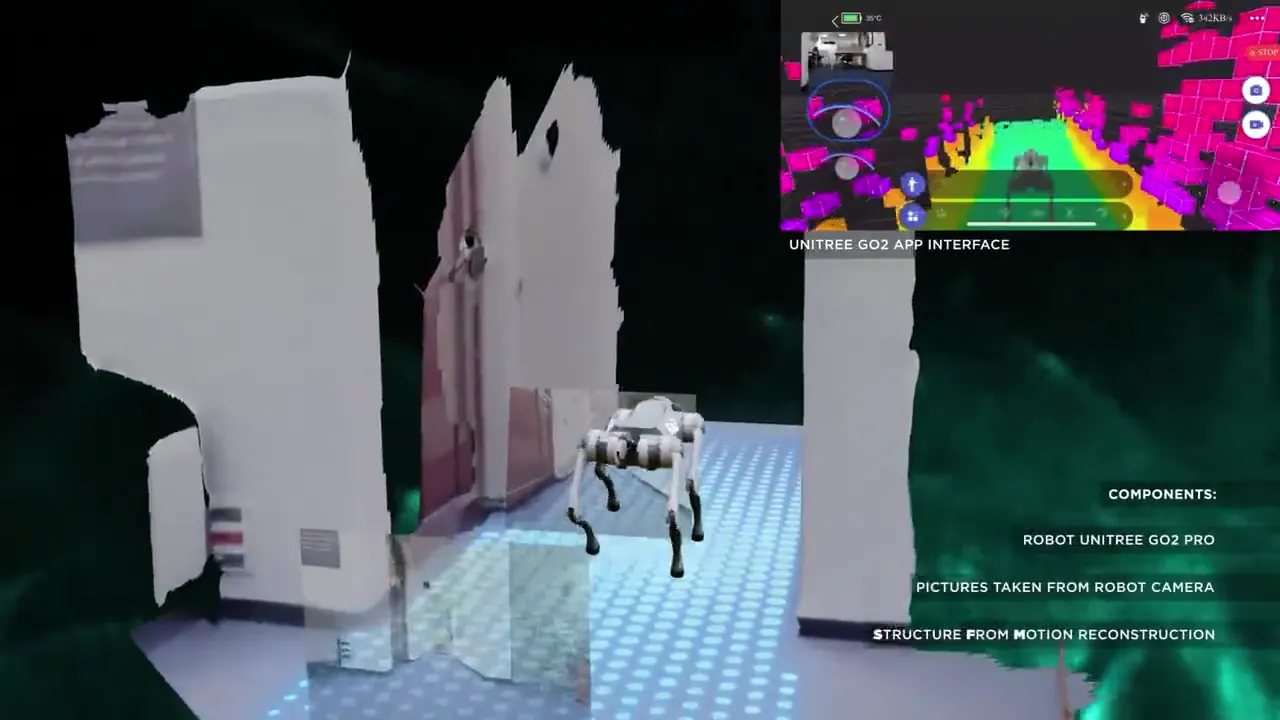
Industrial plants & warehouses
Inspection rounds of gauges, panels, exits and extinguishers, with photo evidence.
See the use cases →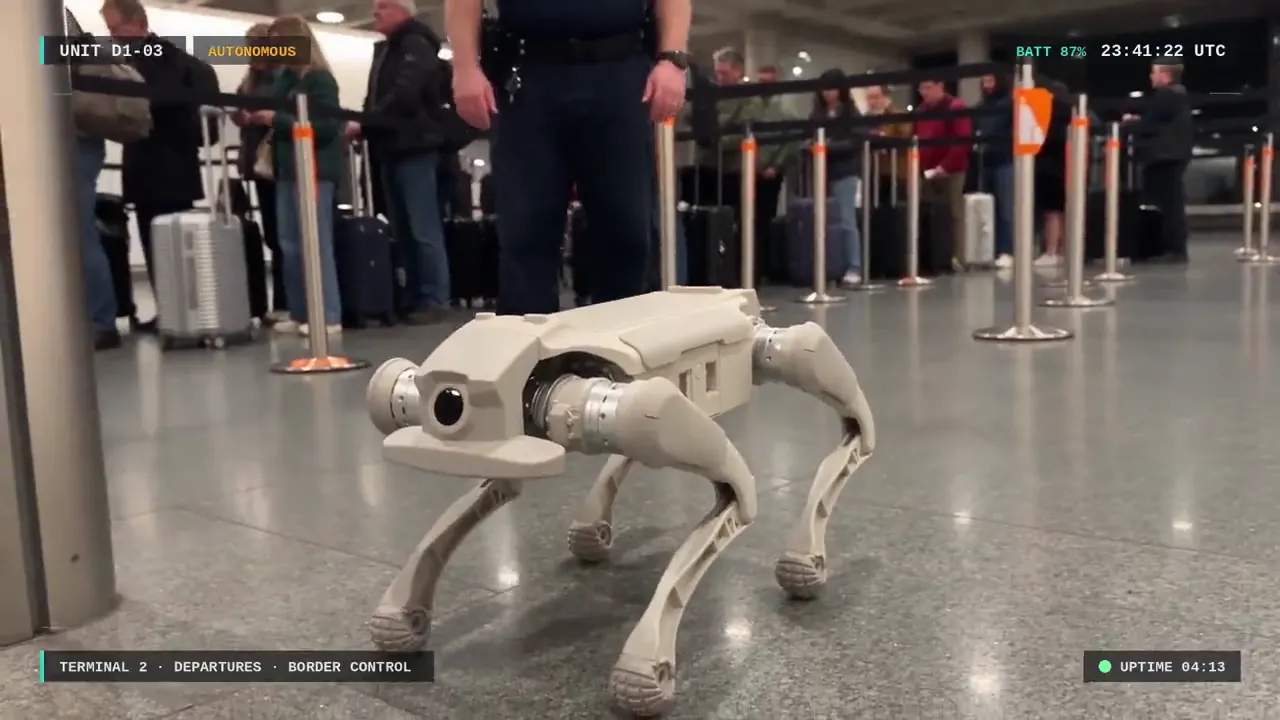
Retail & commercial buildings
Malls, offices and hotels: after-hours rounds, spoken notices and checks in public areas.
See the use cases →